Building Stronger Communities | Mental Health Month – 3.10.2026
For the first week of Mental Health Month, Building Stronger Communities started with a simple question:
Why do so many of our conversations about mental health begin when someone is already struggling?
We have become much better at encouraging people to speak up, check in with a mate and ask, “Are you okay?”
Those conversations matter.
But what if we started earlier?
Mental health isn’t something we suddenly have when things go wrong. We all have mental health, just as we all have physical health, and looking after our mental wellbeing can be part of everyday life.
We don’t wait until we’re dehydrated before deciding water is important.
We don’t wait until our teeth hurt before we’re told to brush them.
So why should looking after our mental wellbeing wait until crisis?
🎧 LISTEN: Mental Health Starts Before Crisis
Michelle explores the difference between mental health and mental illness, why so many conversations begin when someone is already struggling, and what it could mean to start looking after our mental wellbeing earlier.
Mental health and mental illness aren’t the same thing
An important part of our Week One conversation was recognising the difference between mental health and mental illness.
Every one of us has mental health, and our wellbeing can change depending on what’s happening in our lives.
There are times when we’re travelling well, times when we’re under pressure and times when we may need additional support.
Mental illness is different and may require professional treatment and support.
Talking about everyday mental wellbeing doesn’t minimise mental illness. Everyday wellbeing strategies also don’t replace professional care when it’s needed.
Instead, it’s about recognising that there is a lot of space between feeling fantastic and reaching crisis.
That’s a space where we can perhaps become better at noticing ourselves — and each other.
🧠 Brain Energy with Luke Evans
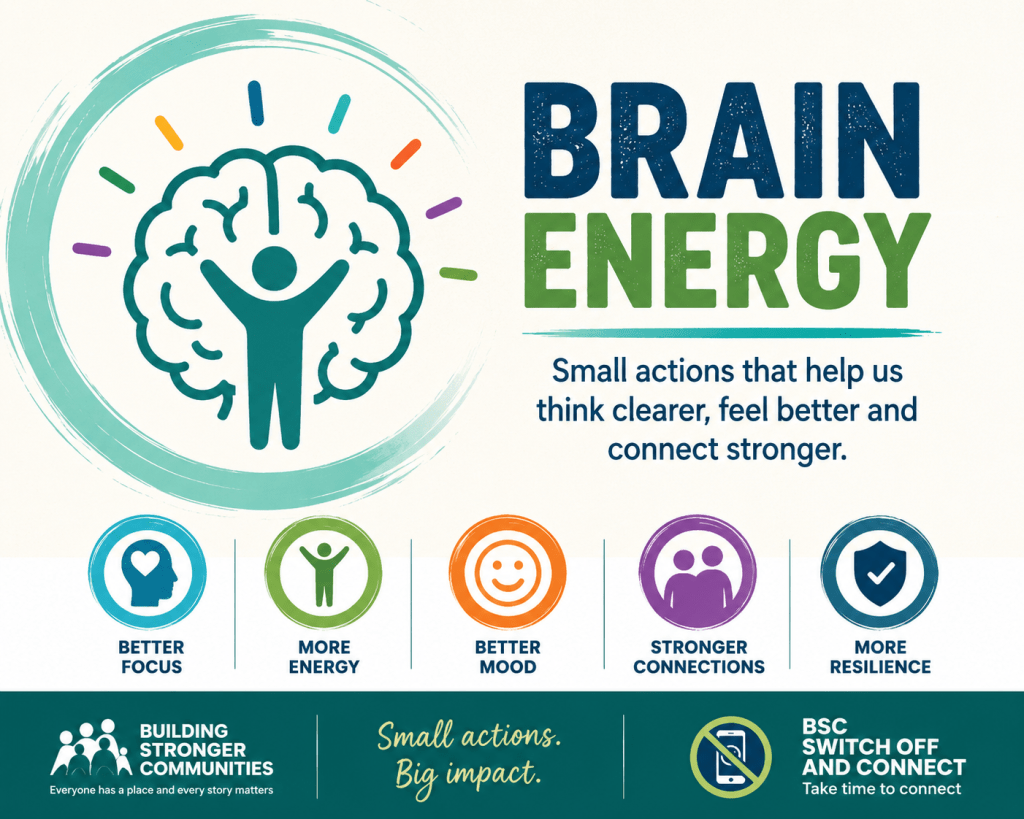
Regular BSC contributor Luke Evans joined us for another edition of Brain Energy, helping us understand more about what’s happening behind the way we think, feel and respond.
Brain Energy fits particularly well with our Mental Health Month message because understanding ourselves is part of looking after ourselves.
The more we understand about our brain, our responses and the things that influence our wellbeing, the better equipped we can be to notice when something may be changing.
🎧 LISTEN: Brain Energy with Luke Evans
Listen to this week’s Brain Energy segment with Luke Evans.
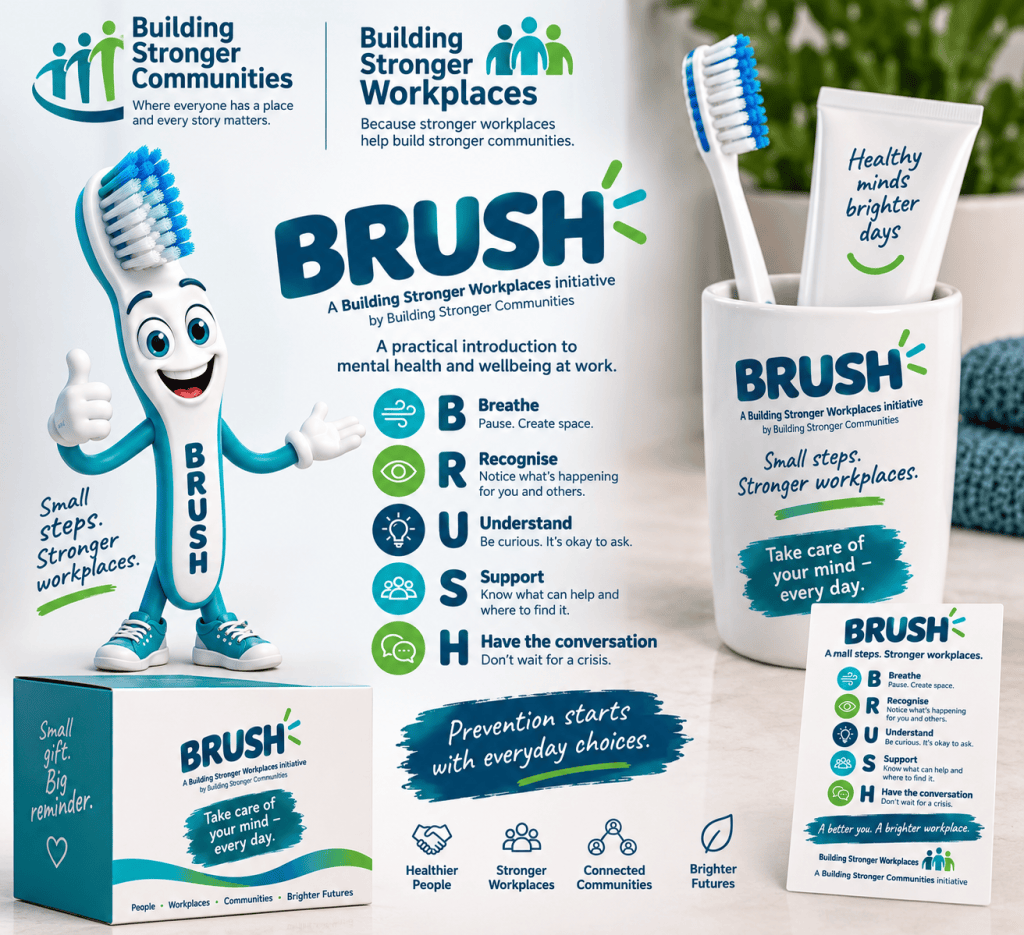
🪥 Introducing BRUSH
During Saturday’s program, we launched a new Building Stronger Communities community project:
BRUSH
The idea came from something incredibly ordinary.
Brushing our teeth.
Most of us learned as children that we don’t brush our teeth once and declare the job finished forever.
We do it regularly.
So we asked:
What if checking in with our mental wellbeing became as normal as brushing our teeth?
BRUSH gives us five simple prompts:
B – Breathe
Slow down for a moment.
R – Reflect
How am I actually going today?
U – Understand
What might I need right now?
S – Share
Is there something I need to talk about — or someone else I should check in on?
H – Habit
Come back and do it again tomorrow.
BRUSH isn’t therapy, treatment or diagnosis.
It’s simply a reminder to create a small moment in the day to notice how we’re travelling.
Take the BRUSH Challenge
We’re inviting the Western Sydney community to give BRUSH a try.Tonight, when you brush your teeth, don’t add another task to your day.
You’re already standing there for a couple of minutes.Use those minutes for yourself.Take a breath and ask:
How am I finishing today? Tomorrow morning, while you brush, ask: How am I starting today? You don’t need to write down your answer. There’s no score and nobody else even needs to know what your answer is.
Just notice. If something keeps coming up, perhaps that’s worth paying more attention to, talking about with someone you trust or seeking additional support.
Then tomorrow, do it again. That’s the Habit in BRUSH.
Mental health across the generations
Week One also asked another important question:
How has the way we think and talk about mental health changed between generations?
Rather than turning this into a debate about which generation had life harder, we wanted to understand the different experiences.
Linda shared her perspective on growing up at a time when conversations about mental health looked very different.
We explored the pressures her generation experienced, what happened when someone was struggling and what she believes older and younger generations can learn from one another.
🎧 LISTEN: Linda – Looking Back at Mental Health
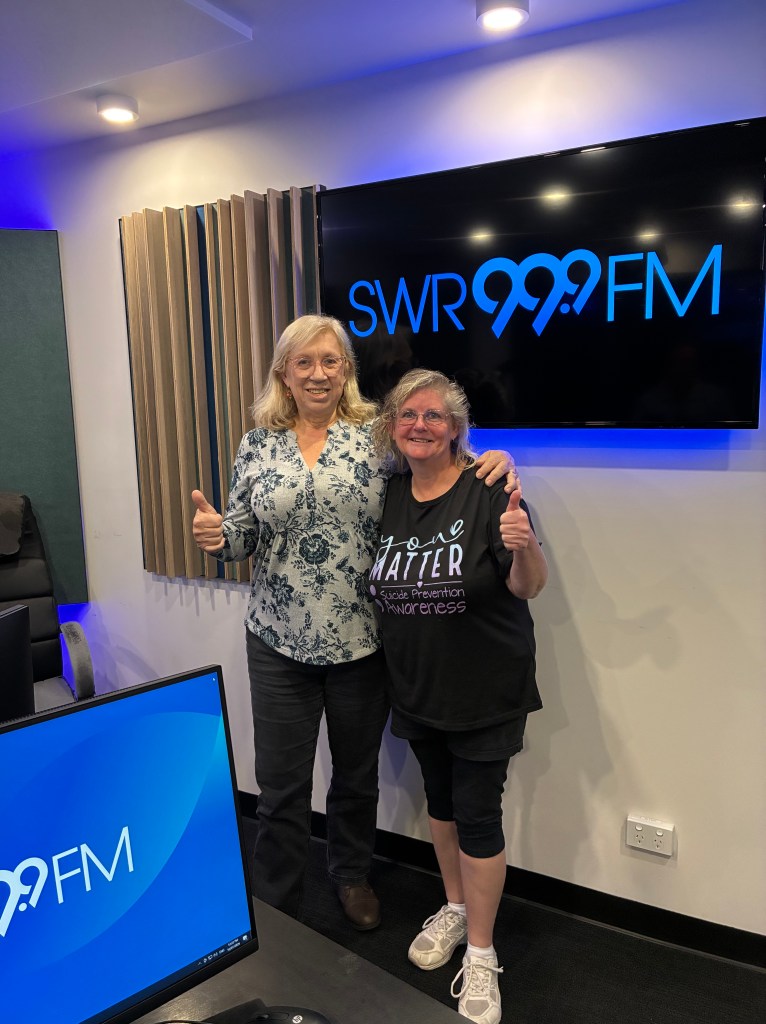
Linda reflects on whether mental health was talked about when she was young, the pressures facing her generation and what she believes younger and older generations can learn from each other.
Then Piper brought the perspective of a much younger generation.
Through conversations with family and our discussion in the studio, we looked at the pressures facing young people today and the very different language and resources now available around mental health.
There are things younger generations can learn from those who came before them.
There are also things older generations can learn from young people.
We don’t have to completely understand another generation’s experience to respect that their experience is real.
And perhaps that’s where empathy starts.
🎧 LISTEN: Through Young Eyes – Piper
Piper shares a young person’s perspective on mental health today and reflects on what she discovered from talking with different generations in her own family.
Local Locker Room – Celebrating the 50th Koori Knockout
With Bethanie away this week, Michelle stepped into the Local Locker Room to recognise a very special milestone — the 50th Koori Knockout.
The Koori Knockout is about much more than what happens on the rugby league field.
For generations, it has brought Aboriginal families and communities together through sport, culture, connection and pride.
Reaching 50 years gave us an opportunity to recognise the people who have played, coached, volunteered, supported and travelled to be part of the event over the decades.
And during a program focused on mental wellbeing, it was also a reminder of something important:
Connection, culture, identity and belonging all matter.
Sport can create places where people feel part of something bigger than themselves — whether they’re playing, standing on the sideline or coming together with family and community.
Bethanie will be back with more from the Local Locker Room soon, but this week Michelle was very happy to keep her seat warm!
🎧 LISTEN: Local Locker Room – Michelle
With Bethanie away Michelle took on the Local Locker Room with the 50th Koori knockout this
🎧 Switch off and Connect: The BRUSH
📻 Siv’s Community Noticeboard
Mental wellbeing isn’t only about what happens inside our own heads.
Community and connection matter too.
Each week on Building Stronger Communities, Siv brings us the Community Noticeboard, sharing events, activities, opportunities and useful information from across Western Sydney.
Getting involved in our local community can create opportunities to meet people, find something we enjoy, volunteer, learn something new or simply feel a little more connected to where we live.
🎧 LISTEN: Siv’s Community Noticeboard
Catch up on this week’s community events, activities and useful local information from across Western Sydney.
And next week, we’re turning the microphone around.
Listeners regularly hear Siv bringing us the Community Noticeboard. For Week Two of our Mental Health Month series, we’ll hear much more about Siv himself.
Different generations. A common need.
The world Linda grew up in is very different from the world Piper is navigating today.
The pressures are different.
The language is different.
The support available is different.
But underneath those differences, there are some things that haven’t changed.
People need connection.
We need somewhere we belong.
We need people who notice when we’re not ourselves.
And sometimes we need someone who is prepared to listen without immediately trying to fix everything.
That’s why our message for Week One of Mental Health Month is:
Mental health starts before crisis.
BRUSH won’t solve every mental health challenge.
That’s not what it’s designed to do.
But if attaching a two-minute check-in to something we already do every day helps us notice ourselves — or someone else — a little earlier, it’s a habit worth trying.
Coming up next on Building Stronger Communities
Our Mental Health Month series continues next Saturday with:
🦯 Beyond the Disability: Independence, Inclusion & Belonging

Ahead of International White Cane Day on 15 October, we’re putting the focus on a voice BSC listeners already know well — Siv.
We’ll talk about his experience of blindness, independence, accessibility, assumptions, isolation, confidence and belonging.
Rather than talking about disability, we want to hear directly from someone living it.
Because stronger communities aren’t created simply by including people in the conversation.
They’re created when people have the opportunity to help lead the conversation.
Building Stronger Communities
Saturdays, 8am–10am on SWR 99.9FM
Where everyone has a place and every story matters.



Leave a comment